
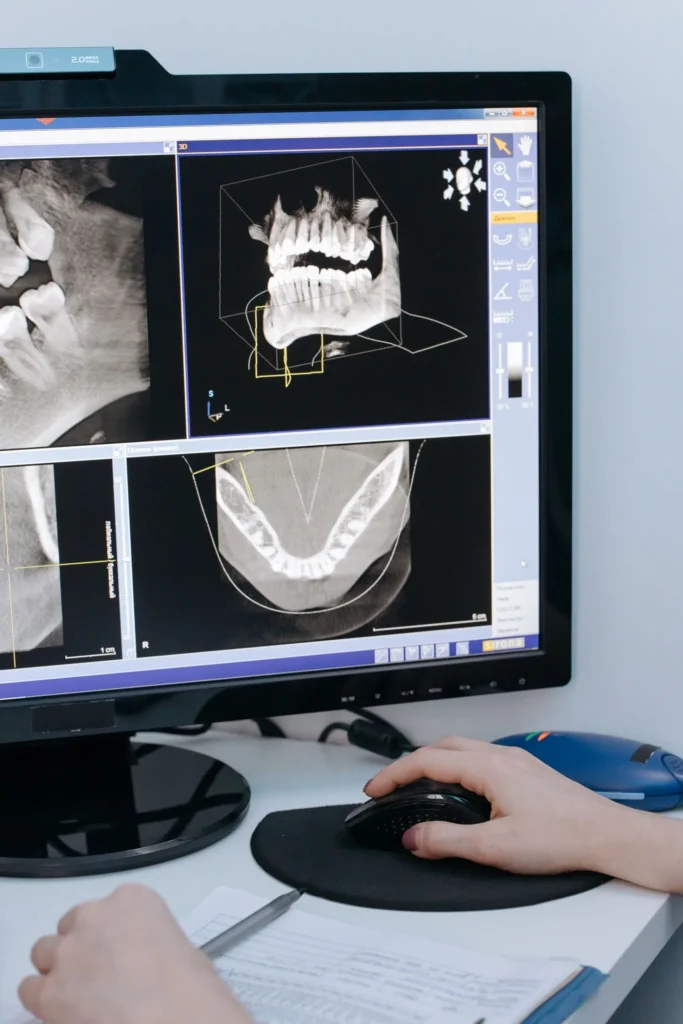
Deep decay is decay that has passed through enamel and dentine and come close to the nerve (pulp). It typically gives sharp pain to sweet, cold or food packing into the cavity — and many people ignore it until the pain becomes constant. That is exactly when the chance to keep the tooth alive is lost.
How is it treated? If the nerve is not yet inflamed, deep decay can often be solved with a filling — careful removal of the decay and protection of the area near the nerve, in one visit, under anaesthetic, without pain. If the decay has reached the nerve, the tooth is saved by root canal treatment: even then the tooth stays yours, functional and pain-free.
Why not wait? Because deep decay has only two directions — filling or root canal — and every week of waiting moves you towards the second. And when inflammation turns into nerve inflammation, the pain will not ask you for an appointment.
Pain-free treatment is our standard, not a privilege. Nothing here is done „on a live nerve“: anaesthetic first, a check that everything is numb, a pause whenever you ask for one.
Price: see the dental price list; at the examination you know the exact price before we do anything.
Frequently asked questions
How do I know the decay is deep?
Pain to sweet and cold that lingers, a hole you can feel with your tongue, pain when chewing. But only an examination and an X-ray show the depth reliably.
Does deep decay always mean removing the nerve?
No. Caught before the nerve inflames, a protective filling is often enough.
Does treating deep decay hurt?
No — it is done under anaesthetic. If you are anxious, tell us; we have options for anxious patients too.
How long does it take?
A filling in one visit; root canal usually 1–2 visits.
Book a check-up today — ESTERA, Bokeljska 7, Vračar, Monday–Friday 12:00–20:00, +381 66 378 372 or the contact page. We speak English.
Content prepared and medically reviewed by Dr Nenad Stanković, DDS/DMD, specialist in cosmetology, international lecturer and trainer in aesthetic medicine.