
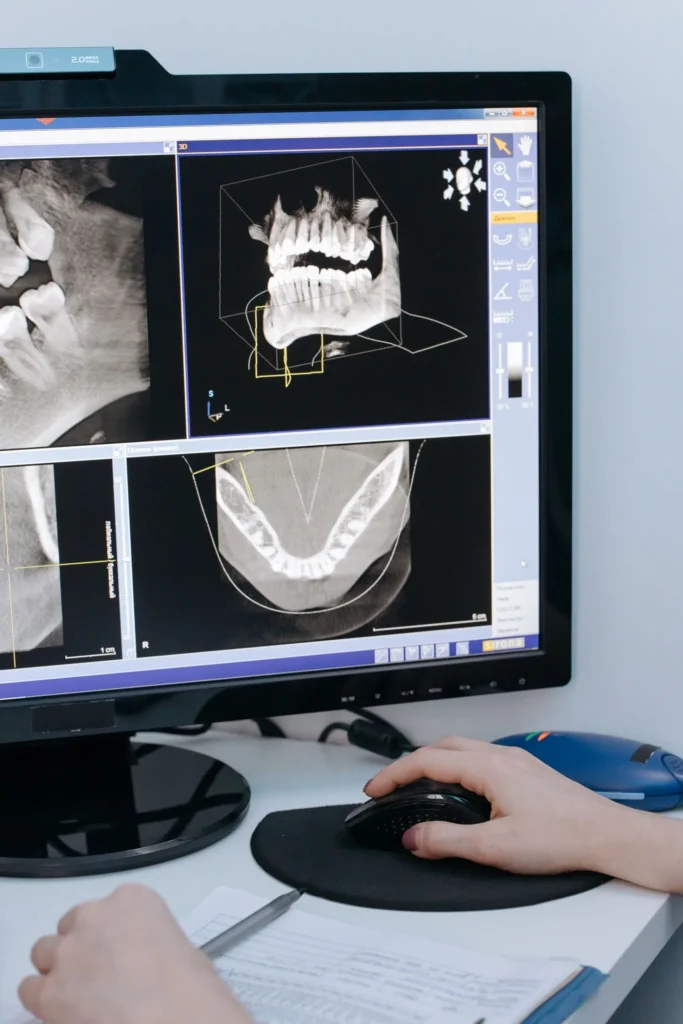
Tooth gangrene (a dead tooth, pulp necrosis) develops when an inflamed nerve dies — most often after untreated nerve inflammation or a blow to the tooth. Typically the strong pain suddenly stops, and many people then postpone the visit exactly when they should not: the infection stays in the tooth and bone and does its damage without the pain that would warn you.
Signs: a tooth that has darkened or changed shade, pain that disappeared after a period of strong toothache, a bad smell or taste, sometimes a swollen gum or a „pimple“ (fistula) next to the tooth, a feeling that the tooth is „higher“ when you bite.
How is it treated? Most often with root canal treatment — the tooth is opened, the canal contents removed and disinfected, then sealed hermetically. If the infection at the root tip persists after treatment, the next option is apicoectomy — a small surgical procedure that cleans the root tip while the tooth still stays. Extraction is the last option, and then we plan a replacement straight away.
Good to know: a darkened tooth after root canal treatment can often be brought back to its natural shade with internal whitening or a crown — ask us about the options.
Price: see the dental price list; you receive the exact estimate at the examination with an X-ray.
Frequently asked questions
The pain stopped — does that mean it passed?
Unfortunately most often the opposite: the nerve has died and the infection continues into the bone. An examination is necessary.
Can a dead tooth stay in the mouth?
Yes — after root canal treatment and filling it can serve for many years. Without treatment — no.
Why did the tooth darken?
Breakdown products of the tissue stain the tooth from inside. It also often happens years after a blow.
Does treating a dead tooth hurt?
The tooth is dead and, with anaesthesia, treatment passes without pain.
Book an examination — ESTERA, Bokeljska 7, Vračar, Monday–Friday 12:00–20:00, +381 66 378 372 or the contact page. We speak English.
Content prepared and medically reviewed by Dr Nenad Stanković, DDS/DMD, specialist in cosmetology, international lecturer and trainer in aesthetic medicine.