
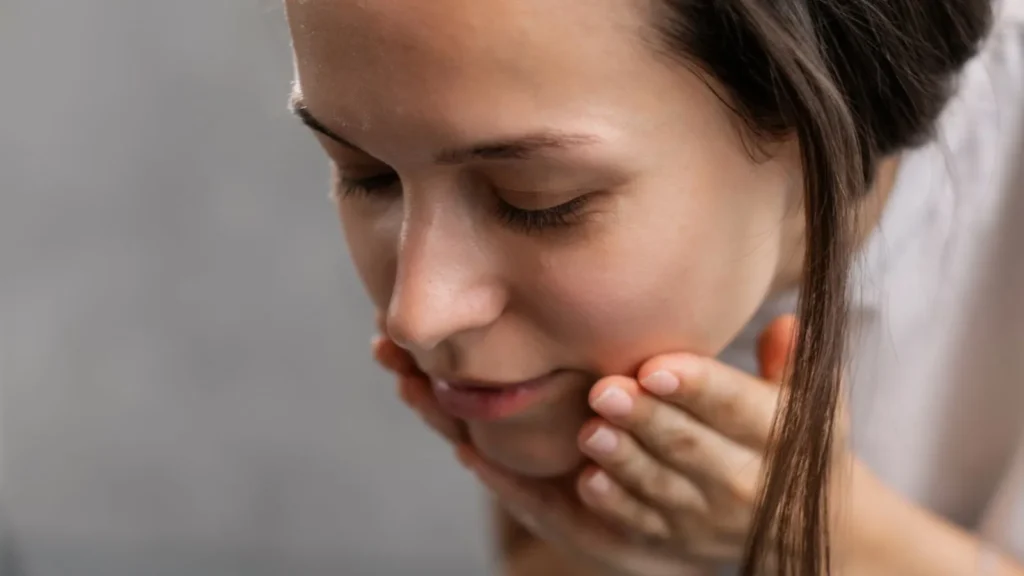
If you are waiting for acne to „go away on its own“, you risk what comes after: scars and dark marks that are far harder to remove than the pimples themselves. The smartest moment to act is while acne is active — here is what can be done then, and what should not be.
In short
- The problem: active inflammation — pimples, blackheads, oily skin
- The goal: calm the inflammation in time and prevent scars and marks
- What helps while acne is active: azelaic and chemical peels, laser acne treatment, proper home care
- What NOT while inflammation lasts: microneedling and scar treatments
- Moderate to severe acne: medication is also needed — we will tell you honestly
On this page
- What is acne and why does it happen?
- Why treat it while it is active?
- What helps while acne is active?
- What we do not do while acne is active
- When acne needs medication
- What a treatment plan looks like
- Frequently asked questions
What is acne and why does it happen?
Acne starts when a sebaceous gland — driven by hormones — overfills with sebum, the duct clogs, and the bacterium Cutibacterium acnes triggers inflammation. That is why acne is not a sign of „dirty skin“: excessive, aggressive washing only further damages the skin barrier. Hormonal shifts (puberty, the cycle, stress), certain skincare products and genetics play the main roles.
Why treat it while it is active?
Every inflammation in the skin can leave a trace — a post-inflammatory dark mark or a scar. Controlling active acne is therefore the cheapest and most effective way to prevent the scars we later treat with lasers and other methods. The sooner inflammation is under control, the fewer traces remain.
What helps while acne is active?
- Azelaic acid peel — azelaic acid is anti-inflammatory, helps with blackheads and pimples and gently evens out the marks acne leaves. More: Easy Droxy azelaic peel.
- Chemical peels tailored to acne — speed up renewal of the surface layer and unclog pores.
- Laser acne treatment (Fotona) — Nd:YAG laser light safely reaches the overactive sebaceous glands and thermally reduces them, calms inflammation and accelerates healing, while stimulating collagen remodelling.
- Proper home care — what may and may not go on acne-prone skin: our cosmetics guide and care after peels.
What we do not do while acne is active
Microneedling and scar treatments are NOT performed over active inflammation. First the acne is calmed, and only then do we work on texture and scars — in this order the result is better and the risk lower. More: microneedling and acne scars.
Once the acne has calmed, we move to what it leaves behind: microneedling and advanced microneedling for uneven texture and indented scars, chemical peels for marks. The plan and the right moment are set at the examination. More: acne scars.
When acne needs medication
For moderate to severe acne — painful nodules, cysts, widespread inflammation — the basis of treatment is therapy prescribed by a physician (dermatologist), per current guidelines. Our job then is to guide the skin through and after that therapy: calming it, rebuilding the barrier and preventing marks. If your acne needs more than aesthetic treatments, we will tell you openly — and refer you onward in time.
What a treatment plan looks like
We start with a consultation and assessment of the acne grade, then choose a combination: peels, a laser protocol and home care, with reviews. The goal is twofold — today’s pimples under control and future scars prevented.
Frequently asked questions
May a peel be done on active acne?
Yes — the azelaic peel is made precisely for acne-prone skin. What we avoid is harsh, aggressive exfoliation and home „squeezing“.
Does laser acne treatment hurt?
It is well tolerated; you feel warmth and a light snap in the area.
How many treatments are needed?
It depends on the grade — usually a series of treatments with proper care. The plan is set individually, after assessment.
Does acne go away on its own after puberty?
For some people yes, but waiting carries the risk of scars. Adult acne is common, especially in women, and deserves the same attention.
Does diet matter?
Guidelines mention a possible link with dairy and high-glycaemic food — this is individual and does not replace treatment.
References
- Reynolds RV, Yeung H, Cheng CE, et al. Guidelines of care for the management of acne vulgaris. J Am Acad Dermatol. 2024. DOI: 10.1016/j.jaad.2023.12.017
- Fotona — Acne & Acne Scar Revision (laser acne-treatment technology): fotona.com
Book a consultation
If acne has already left its mark — scars or dark spots — that is where we can help. For active acne, see a dermatologist in good time. ESTERA, Bokeljska 7, Vračar, Belgrade.
Book a consultation: +381 66 378 372
Content prepared and medically reviewed by Dr Nenad Stanković, DDS/DMD, specialist in cosmetology, international lecturer and trainer in aesthetic medicine.