
Chemical peel at a glance
- What is treated: sun spots and marks, acne scars, enlarged pores, fine lines and an uneven complexion
- How it works: acid solutions remove the surface layers of the skin in a controlled way and stimulate its natural renewal
- Treatment time: around 30 minutes
- Recovery: usually a few days of mild peeling, depending on the depth of the peel
- Effect: gradual and long-lasting, with a course of treatments and regular sun protection
- Best time of year: autumn and winter
- Price: view our price list
About the chemical peel treatment
Discover how to free yourself from old acne scars, spots and marks from sun exposure or other factors, enlarged pores and pronounced lines. The solution is certainly the chemical peel. The chemical peel is a very popular aesthetic procedure today, because solutions of specific acids applied to the skin induce peeling and renewal. In this way, the quality and structure of the skin improve visibly over a long period of time. Collagen fibres regenerate, the skin looks tighter and younger, acne is less present, and scars and pores become shallower. This procedure allows the removed layer to be renewed with a new and healthy one, and the regenerated skin is soft, supple and velvety.
What is your look missing to be even more attractive and interesting? A hat. Be a lady and protect your new skin at the same time. Autumn and winter are the ideal seasons for this procedure, since the skin’s protective barrier is removed and the new layer is very sensitive. To prevent new pigmentation, protect yourself from the sun with the useful advice of our specialists. As there are peels of different depths, the recovery period differs accordingly.
What does the chemical peel treatment involve?
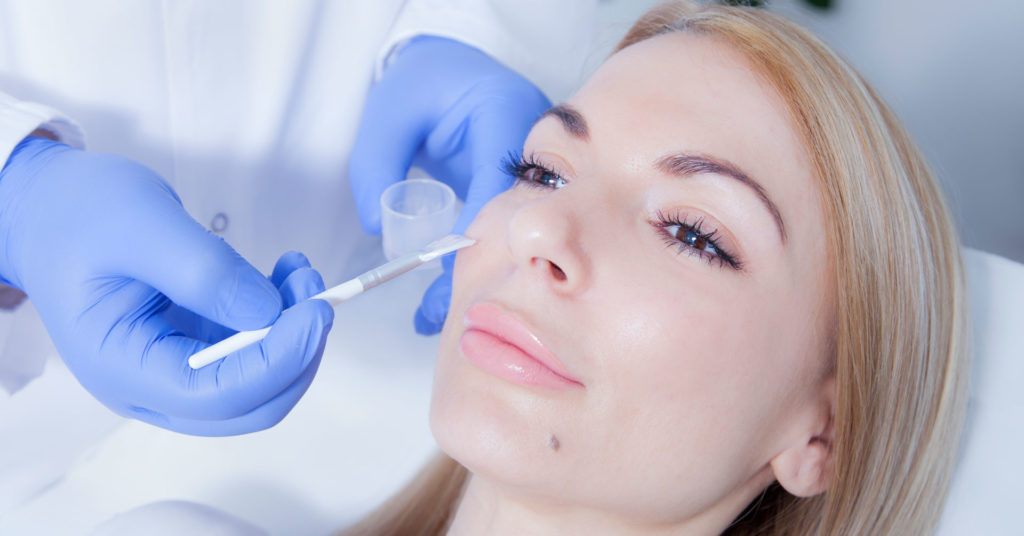
Every treatment at Estera Aesthetic & Dental Clinic begins with an examination and a conversation. Dr Nenad Stanković assesses the condition of your skin and the type and depth of the changes you want to address, and on that basis chooses the type and concentration of peel that suits you exactly. The skin is then thoroughly cleansed and prepared, after which the solution is applied in controlled layers. During application most clients feel a mild tingling or stinging that passes as soon as the treatment is finished and neutralised. Finally, soothing and protective preparations are applied. You come to the clinic and leave it the same day, with clear instructions for care at home.
What types of chemical peel exist?
By depth of action, chemical peels are divided into superficial, medium-depth and deep. A superficial peel acts on the uppermost layers of the skin, refreshes the complexion and requires minimal recovery, so it is the most common choice for a first treatment. A medium-depth peel reaches deeper and is used for more pronounced spots, scars and lines, with a somewhat longer renewal period. Deep peels are rarely used today and are reserved for special indications. At Estera we use the latest generation of chemical peels, produced in line with the highest European standards. Dr Nenad Stanković is a certified specialist in the application of chemical peels within the expert teams of the Spanish companies Aesthetic Dermal and SKIN TECH.
Who is the treatment for, and when is it postponed?
A chemical peel is a good choice if you are troubled by sun spots and marks, acne scars and unevenness, enlarged pores, fine lines, or tired, uneven skin lacking glow. Treatment is postponed during pregnancy and breastfeeding, with an active infection or herpes in the treatment area, on freshly damaged or sunburnt skin, and during isotretinoin therapy and for several months after it. If you have a pronounced tendency to keloid scarring or very sensitive skin, the date and type of treatment are decided individually at the examination. That is why the first step is always a professional assessment.
Recovery and aftercare
After a superficial peel the skin usually peels mildly for a few days, and it is important not to pick at or irritate it. While the skin renews itself, do not expose it to direct sun or sunbeds and apply a high-protection cream (SPF 50) regularly, because the new layer of skin is more prone to pigmentation. Home care involves gentle cleansing and hydration with the preparations your doctor recommends, without rough exfoliants and aggressive ingredients until the skin has fully settled. Proper care after treatment is just as important for the result as the treatment itself.
A client’s experience
„I had always been bothered by the spots and marks I got from sunbathing, and I successfully covered them with quality cosmetics. However, you all know that feeling when you wash your face, look in the mirror and are left alone with your imperfections. At ESTERA I found out in detail about the advantages of the chemical peel, and after extensive instructions from the specialists I decided on this treatment. During the peeling period I followed the advice on sun protection and applied the recommended creams for even better effects. I used the holiday days after New Year, and then proudly showed off my new face. The mirror and I have made peace. Now we are best friends.“

How much does a chemical peel cost?
The price of the treatment depends on the type and depth of peel chosen, as well as whether a single treatment or a course is performed. You can view current prices in the price list, and you receive a precise treatment plan with the final price at the examination, after a professional assessment of your skin.
Frequently asked questions about chemical peels
Does a chemical peel hurt?
The treatment is not painful. During application of the solution, most clients feel a temporary tingling or stinging that subsides immediately after neutralisation. The intensity of the sensation depends on the depth of the peel and the sensitivity of your skin.
How many treatments do I need?
It depends on the condition of your skin and the goal. Some changes are softened with a course of several treatments at intervals, while for milder irregularities fewer are enough. The exact plan is determined at the examination.
When is the best time of year for a chemical peel?
Autumn and winter. The sun’s radiation is weaker then, and the skin is easier to protect from the sun while it renews itself, which reduces the risk of new pigmentation.
How long is the recovery?
After a superficial peel, usually a few days of mild peeling. With deeper peels, renewal takes longer. At the examination you will receive a realistic estimate for the type of peel recommended to you.
Can a chemical peel be combined with other treatments?
Yes. A chemical peel often fits into a broader care plan, for example alongside biorevitalisation or other treatments, with properly chosen intervals. The doctor plans the combination and order of treatments according to the condition of your skin.
Read more
- Microneedling vs. chemical peel: which treatment erases spots and scars faster?
- How to get rid of acne scars: effective treatments for smooth skin
- How to prevent hyperpigmentation after aesthetic treatments
Always choose the best option for yourself, and you will be rewarded with beautiful skin and a happy smile.
Book a consultation: +381 66 378 372
Treatment price list View the prices of our treatments Call us Book your treatment